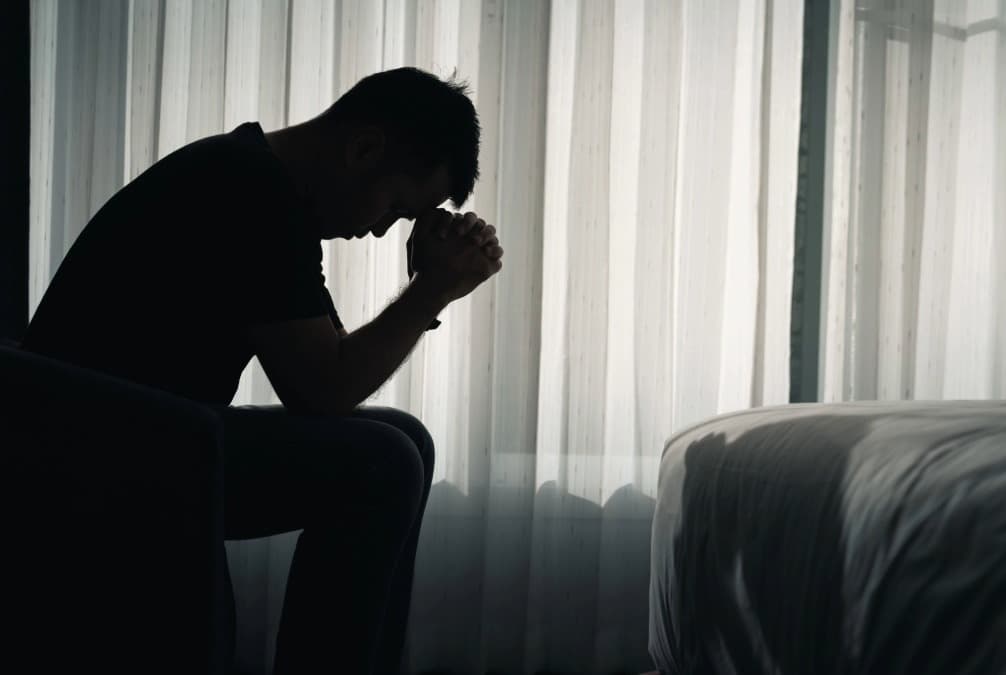

You wake at 3am with a heavy feeling in your chest. Your mind races — work, relationships, health, finances. Your heart beats fast for no obvious reason. You know there is no immediate danger, but your body doesn't.
If that sounds familiar, you are not alone. Anxiety is the most common mental health condition worldwide — including in Greece. According to the World Health Organisation, approximately 1 in 13 people experiences an anxiety disorder at some point in their lives.
The good news: anxiety is treatable. And with the right support, you can regain control.
What anxiety is — and what it isn't
Anxiety is not weakness. It is not fixed by thinking positively. And it certainly doesn't mean something is fundamentally "wrong" with you.
Anxiety is an evolutionarily ancient alarm system. Your brain perceives a threat — real or imagined — and triggers the fight-or-flight response: adrenaline rises, heart rate accelerates, muscles tense. Useful if you're facing a bear. Exhausting if it fires every time you open your work emails.
How anxiety manifests — the symptoms
Anxiety is not just "worry". It shows up at three levels:
Physical symptoms
- Rapid heartbeat or the feeling your heart is "skipping a beat"
- Difficulty breathing or a sense of tightness in the chest
- Muscle tension, headaches, neck and shoulder pain
- Gastrointestinal issues (irritable bowel, nausea)
- Dizziness or a sense of detachment (derealisation / depersonalisation)
- Sleep disturbances — difficulty falling or staying asleep
Cognitive symptoms
- Difficulty concentrating — your mind constantly wanders to "what ifs"
- Catastrophising ("if X happens, then Y will follow, and then everything will fall apart")
- Difficulty making decisions — even small, everyday ones
- Intense fear of criticism or failure
Behavioural symptoms
- Avoidance of situations that trigger anxiety (social events, phone calls, decisions)
- Procrastination — especially on tasks that feel threatening
- Increased reliance on alcohol or caffeine to "manage" the tension
- Excessive checking or perfectionism as a way of controlling anxious feelings
264M
Source: WHO, 2019
Causes — why anxiety disorders develop
There is no single cause. Anxiety develops from a combination of:
Biological factors: Genetics plays a role — if a parent has an anxiety disorder, the likelihood of developing one is higher. Neurobiological imbalances (serotonin, GABA) also influence baseline anxiety levels.
Psychological factors: Traumatic events, particularly in childhood (abuse, loss, instability), significantly increase vulnerability. Perfectionist thinking patterns ("I must do everything perfectly") chronically fuel worry.
Social and environmental factors: Chronic work stress, financial uncertainty, social isolation. In Greece, the years of economic crisis left a mark — studies show anxiety levels increased substantially during 2010–2020.
When to seek help
Many people wait far too long — often years — before speaking to a specialist.
If you answer yes to at least three of the following, seeking help is strongly recommended:
- You worry almost every day about various things, for at least 6 months
- You find it difficult to control the worry, even when you know it's out of proportion
- The anxiety is affecting your sleep, work, or relationships
- You are avoiding situations (meetings, decisions, calls) because of anxiety
- You use alcohol, food, or other behaviours to "bring down" your anxiety
- You feel exhausted from being constantly in a state of alertness
Treatment — what actually works
The good news: anxiety disorders have high treatment success rates. The most effective approaches:
Cognitive Behavioural Therapy (CBT)
CBT is the gold standard for anxiety disorders, supported by decades of clinical research. Its goal: to identify the distorted thinking patterns that fuel anxiety ("catastrophising", "mind reading", "overgeneralising") and replace them with more balanced perspectives.
CBT also teaches exposure techniques — gradually facing the situations you've been avoiding until they lose their power over you.
Duration: typically 8–20 sessions.
ACT (Acceptance and Commitment Therapy)
ACT does not aim to eliminate anxiety — it aims to change your relationship with it. Rather than fighting anxious thoughts, you learn to observe them without following them.
Mindfulness-based Cognitive Therapy (MBCT)
Combines CBT with mindfulness techniques. Strong evidence base, especially for recurrent anxiety and depression.
Medication
For moderate to severe anxiety, a combination of psychotherapy and medication (SSRIs/SNRIs, short-term benzodiazepines) is highly effective. Medication is prescribed by a psychiatrist — a psychologist cannot prescribe.
Find a therapist for anxiety in Greece
If you recognise yourself in what you've read, the next step is to speak with a specialist.
On AyloCare find you can:
- Filter therapists who specialise in anxiety
- See real availability and fees
- Choose online or in-person sessions (Athens, Thessaloniki, and more)
- Book an appointment directly
No referral needed. No need to "justify" why you're seeking help.
This article is for informational purposes only and does not constitute professional psychological or medical advice. If you are experiencing a mental health crisis, please call 10306 (Suicide Prevention Line, 24/7, free).